
You are likely frustrated by the new price quotes you received for your latest tea order. Costs are suddenly rising, your budget is tight, and you need to explain this to your boss. Why is this happening so suddenly in 2024?
The price surge is mainly due to a severe heatwave in Japan that destroyed crops, forcing global buyers to switch to Chinese suppliers. Although Chinese matcha is cheaper to produce, the sudden demand spike has overwhelmed current supply capacities, driving prices up significantly.
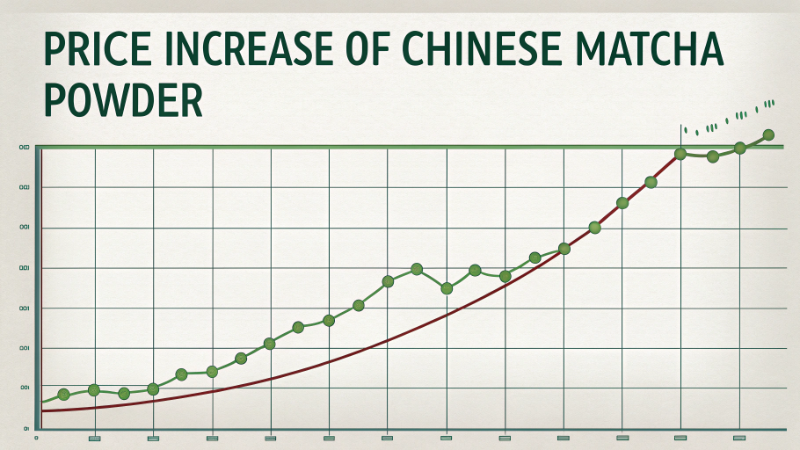
I have been working in the tea industry for 26 years here at Naturcha, and I rarely see market shifts happen this fast. Usually, prices change slowly over a few seasons. However, this year is different. A mix of bad weather and global trade shifts has created a perfect storm. Let me explain exactly what caused this situation so you can plan your inventory better.
Did Japan’s weather really destroy the matcha harvest? We usually trust stable supplies from Japan for high-end matcha. But nature is unpredictable, and this year, the weather caused a disaster that no one expected.
Japan experienced its hottest summer in 120 years in 2024. The extreme heat caused tea leaves to wither and die. This resulted in a massive reduction in matcha production1, creating a global shortage2 that rippled into the Chinese market.
To understand the severity of this, you have to look at the history of weather in the region. Japan is a major producer of matcha, and their farming relies on specific temperatures. In 2024, the heat broke records that had stood for over a century. Tea bushes are sensitive plants. When the temperature stays too high for too long, the leaves stop growing and start to burn.
I have spoken with industry friends who visited these regions. They described fields where the leaves turned brown on the branch. This is not just a small problem; it is a supply shock. Because the domestic supply in Japan dropped so sharply, Japanese companies had to keep what little they had for their own local market.
This means there was almost nothing left to export. The global tea market is like a connected water system. When one tank runs dry, everyone rushes to the next tank. In this case, the "next tank" is China.
The Impact of Heat on Tea Quality
| Factor | Normal Year | 2024 Heatwave Year |
|---|---|---|
| Temperature | Moderate, ideal for shading | Record-breaking heat |
| Leaf Condition | Green, tender, moisture-rich | Dry, withered, brown |
| Yield | 100% (Baseline) | Significantly Reduced |
| Export Availability | High | Very Low |
This chart helps explain why the shortage is physical, not just economic. The tea simply does not exist in the quantities we are used to.
Why are international buyers flooding the Chinese market?
You might want to stick with your old suppliers because change is hard. But when shelves are empty and prices skyrocket, you have to look for alternatives quickly.
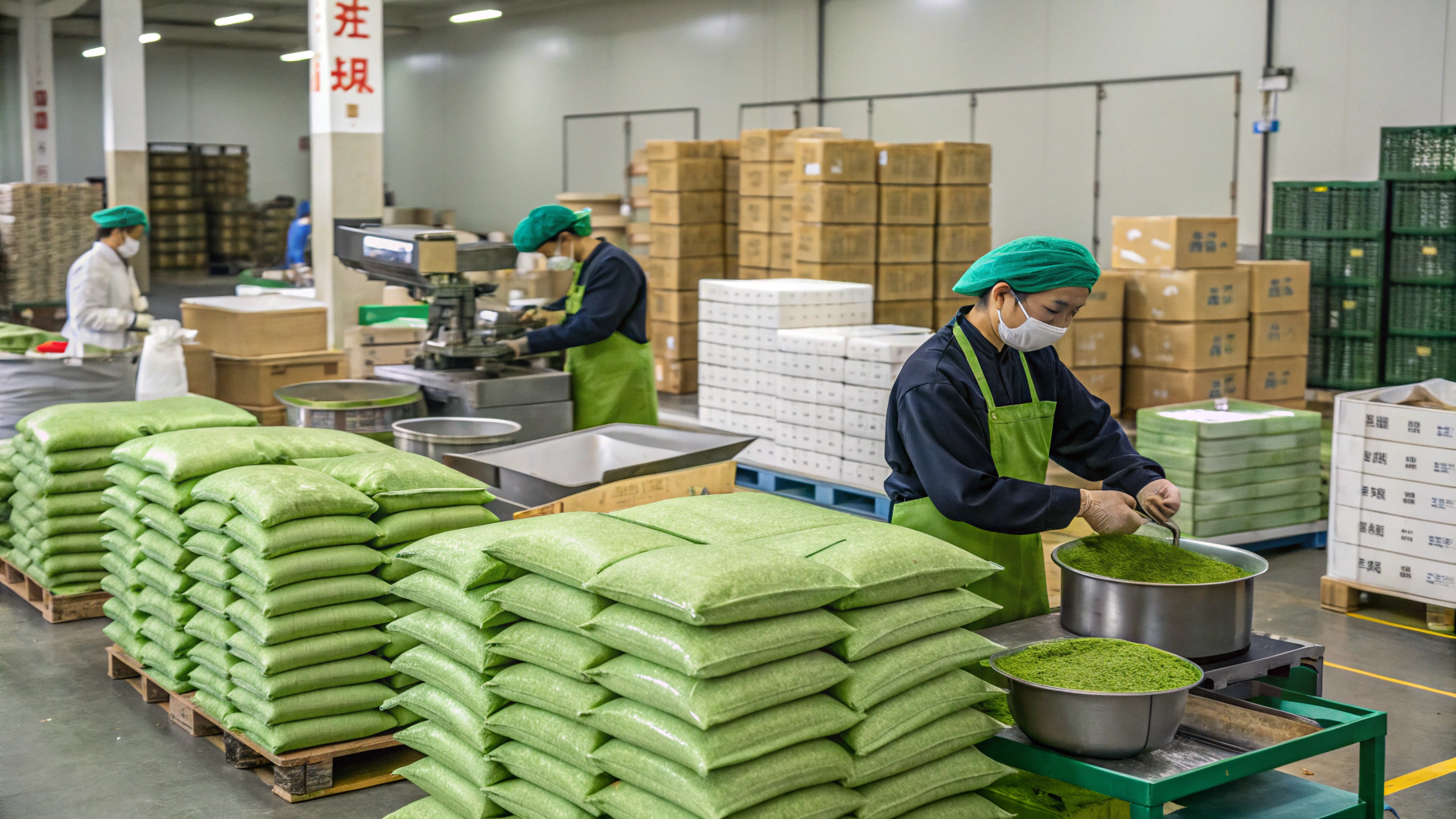
Chinese matcha production costs are only one-third to one-half of Japan’s. When Japan’s supply failed, international buyers immediately switched to China for availability and better pricing. This sudden influx of orders created a massive "demand shock" for Chinese factories.
-
Can Chinese tea gardens expand fast enough to fix this?
You might think we can just plant more seeds today and harvest tomorrow. Unfortunately, agriculture does not work like a factory machine where you just speed up the belt.
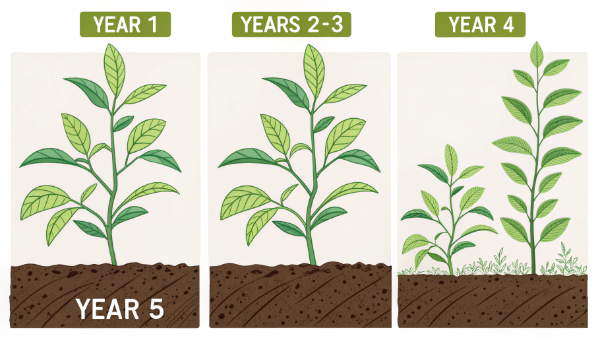
Even though Chinese growers are expanding, a new tea garden takes five years to become productive. We cannot speed up nature. Therefore, the current growth in tea gardens is too slow to meet the exploding global demand right now.
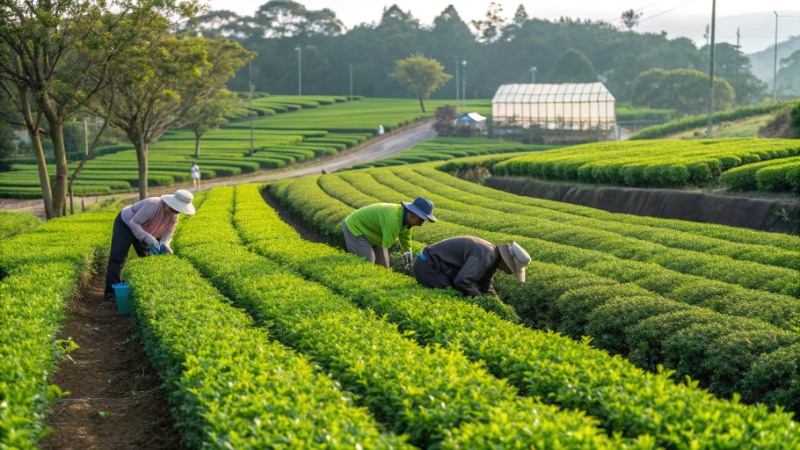
I often have to explain this biological timeline to our clients. They ask, "Cora, why don't you just buy more land and plant more tea?" The answer is that we are doing that, but it does not help us today.
Here is the reality of the tea plant life cycle:
- Year 1: We plant the seedlings. They are tiny and fragile.
- Year 2-3: The plants grow, but we cannot harvest them. They need to build strong roots.
- Year 4: We might get a very small harvest, but the quality is not yet "Premium."
- Year 5: Finally, the tea bush is mature enough for full commercial harvest.
This means if we plant a seed today in response to the 2024 shortage, that tea will not be ready until 2029.
-
This is a classic case of resource competition. In the tea industry, different products often come from the same source. Steamed Green Tea (known as Zhengqing in China) requires fresh, high-quality green leaves. These are the exact same leaves that are required to make Tencha, which is then ground into matcha.
Think of it like this: Imagine a bakery that uses flour to make both bread and cakes. If suddenly everyone in the world wants cakes, the bakery will use all its flour for cakes. There is very little flour left to make bread. The price of bread must go up because flour is now scarce and expensive.
The Chain Reaction:
- High Matcha Demand: Factories are desperate for raw leaves to make matcha powder.
- Aggressive Purchasing: Matcha factories pay a premium price to farmers to secure the leaves.
- Cost Increase: Steamed Green Tea factories must match this high price to get any leaves at all.
- Final Price: The final cost of Steamed Green Tea rises for you, the importer.
At Naturcha, we produce both types. We have 10 modern production lines. We try to balance this, but we cannot ignore the market cost of raw materials. We have to pay our farmers fair market rates. Since the matcha market is so hot right now, the farmers demand higher prices for their leaves.
This is important for you to know if you are a beverage manufacturer or a tea bag packer. Even if you do not sell matcha, the "Matcha Boom" affects your costs. I recommend to my clients to lock in their orders early. If you wait, the raw material competition might drive prices even higher later in the season.
Conclusion
Japan's heatwave caused a massive shortage, forcing global buyers to switch to China. However, Chinese supply cannot expand fast enough to meet this demand, causing prices for both matcha and Steamed Green Tea to rise significantly.