
History
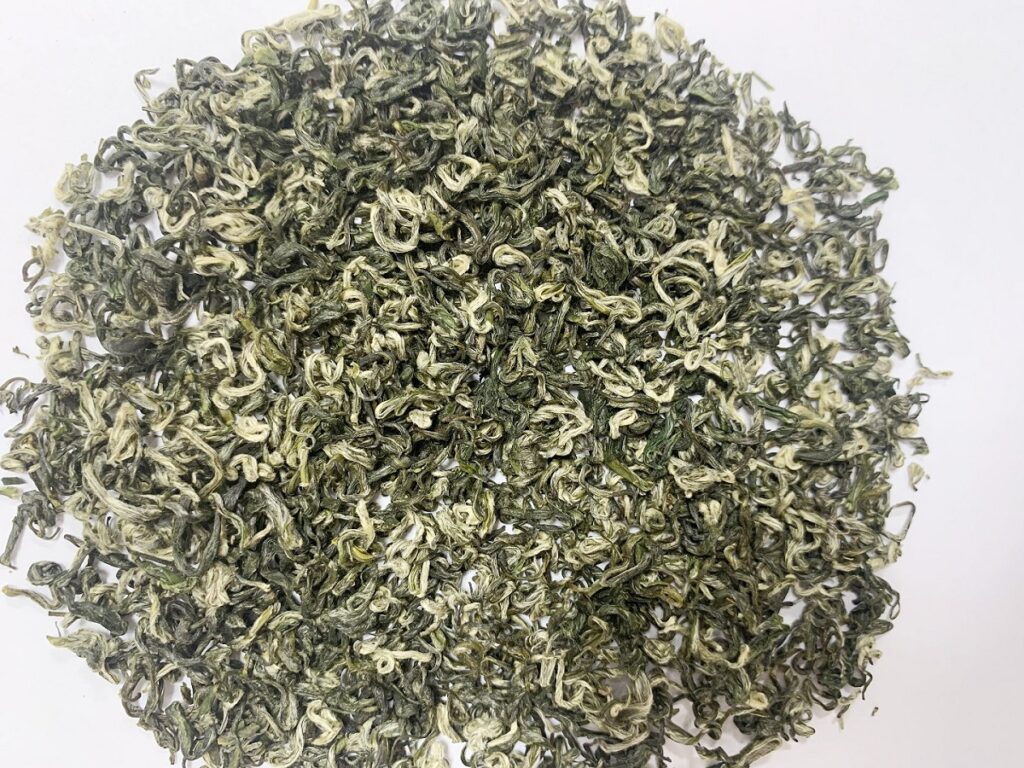
Bi Luo Chun tea originated in the area around the eastern peak of Dongting Mountain in Jiangsu Province. In Chinese, the name “Bi Luo Chun” means “Green Snail Spring”, in reference to its tightly-coiled appearance resembling a snail’s shell, and the fact that it is picked in spring. It was given this name during the Qing Dynasty by Emperor Kang Xi. The Emperor very much favored this tea, but – perhaps with some reason – was not really enamored with the tea’s original name of “Xia Sha Ren Xiang”, which roughly means “a fragrance to scare you to death” or “astounding fragrance”!
During the 1890s it was ranked first amongst Chinese green teas, and since that time it has always been ranked in the top three. For many years it was only grown in the area around Dongting Mountain, but has recently also been produced in Zhejiang and Sichuan provinces.
Tea-fruit intercropping
Different from other tea, Biluochun takes the form of tea-fruit intercropping cultivation:staggered with loquat, peach, pomegranate, apricot and other fruit trees. Thus, tea and fruit trees’ branches are connected to each other, and the roots are intricately interlinked. The tea slowly absorbs the incense of flowers and mature fruit, so it will have the natural quality of fruity taste and floral incense.
Recommend Brewing Method
Teacup: 250ml
80℃
2.5 Teaspoons / 3g Tea
Brewing Time:3-5mins
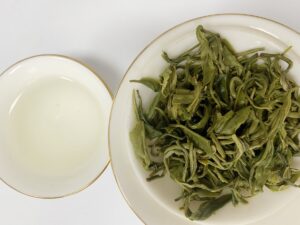
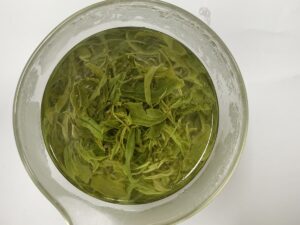
First put some hot water into a 7/10 cup, and then some tea. The top grade tea such as Biluochun with tight strips and tender is more suitable for brewing in this way.
Why green tea looks so green?
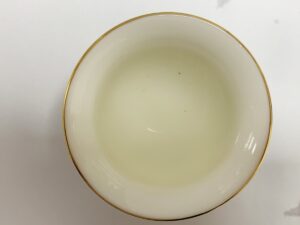
Green tea is non-fermented. It preserves the natural substances in the fresh tea leaves well, including more than 85% of tea polyphenols and cafferine and 50% of chlorophyll, and much vitamin. Thus green tea is featured with “pure soup, green leaves, strongly reserved taste”. In addition, fixation is the key process affecting the quality of green tea. It destroys the activities of oxidation enzyme in fresh leaves at high temperature, inhibits the prooxidative of polyphenold enzymes so as to ensure “green tea leaves, green soup” after brewing.
Effects of green tea
1.Rich in theanine and catechin, it can delay aging and remove free radicals.
2.Polyphenols and their oxidation products in green tea are able to absorb poison of radioactive materials, and thus to help prevent cardiovascular diseases.
3.It can prevent and treat radiation injury.
4.Caffeine in tea can enhance the excitement process of cerebral cortex and plays a role of refreshing.